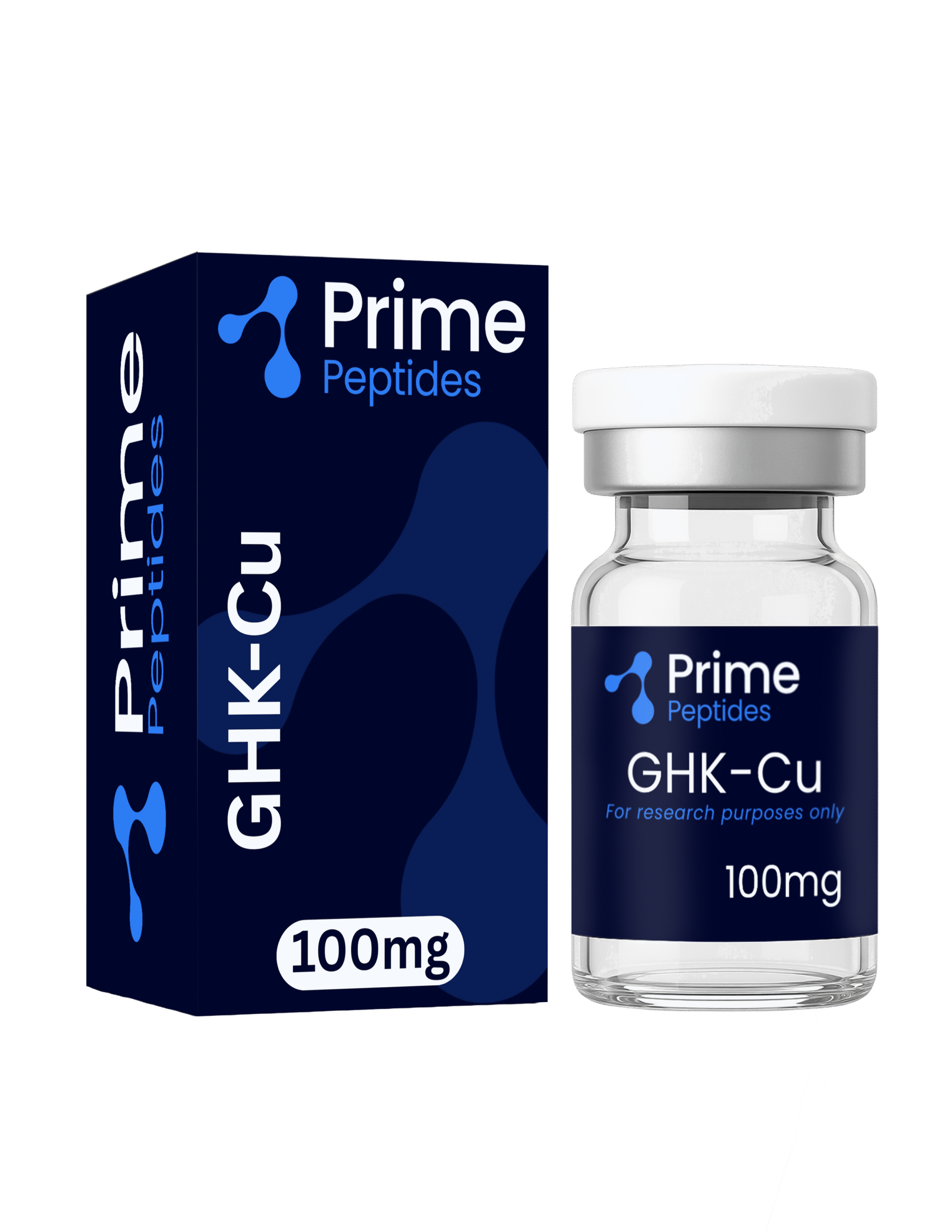
GHK-Cu is a complex of the tripeptide GHK (glycyl-L-histidyl-L-lysine) and copper, which is found naturally in the human body. This complex has antioxidant, anti-inflammatory, and regenerative properties, and is often used in anti-aging and wound-healing products to stimulate collagen production, improve skin elasticity, and promote tissue repair. GHK-Cu levels in the body decrease with age, which is why it is of particular interest for its potential to counteract age-related effects
Scientific Background
GHK (glycyl-L-histidyl-L-lysine) naturally occurs in human plasma, saliva, and tissues.
When bound to copper (GHK-Cu), it exhibits unique biological activities relevant to:
-
Skin regeneration & remodeling
-
Anti-inflammatory signaling
-
DNA repair pathways
-
Collagen and glycosaminoglycan synthesis
-
Wound-healing and tissue-repair processes
-
Stem-cell activation and protection
In research models, GHK-Cu has demonstrated the ability to:
-
Support fibroblast activity
-
Increase expression of repair-related genes
-
Improve cellular resilience under stress
-
Modulate cytokine activity in damaged tissue
-
Influence gene expression associated with aging and tissue breakdown
GHK-Cu is often investigated as a biomimetic signal peptide for skin and tissue repair.
Research Areas of Interest
All information below is intended strictly for scientific, laboratory, and in-vitro research only.
1. Skin Regeneration & Repair Models
Researchers study GHK-Cu for potential effects on:
-
Fibroblast proliferation
-
Collagen I & III synthesis
-
Dermal remodeling pathways
-
Wound-closure studies
2. Anti-Inflammatory & Antioxidant Pathways
GHK-Cu is used to explore:
-
Reduction of inflammatory cytokines
-
Decreased oxidative stress markers
-
Modulation of NF-κB–related pathways
3. Hair-Follicle & Skin-Cell Research
Experiments evaluate:
-
Dermal papilla cell activity
-
Hair-follicle signaling molecules
-
ECM (extracellular matrix) remodeling
4. DNA Repair & Gene-Expression Studies
Researchers examine GHK-Cu’s involvement in:
-
DNA repair enzyme pathways
-
Gene expression linked to cellular aging
-
Tissue-protective gene profiles
5. Cosmetic & Anti-Aging Research Models
Because of its skin-focused activity, GHK-Cu is widely used to study:
-
Firmness and elasticity pathways
-
Fine-line and wrinkle–related signaling
-
Age-related degradation of ECM proteins
All findings are preclinical or in-vitro only, not validated clinical outcomes.
Molecular Profile
-
Peptide: GHK-Cu (Copper Tripeptide-1)
-
Type: Copper-binding tripeptide
-
Sequence: Gly-His-Lys
-
Length: 3 amino acids
-
Molecular Weight: ~340.4 g/mol
-
Form: Lyophilized powder
-
Purity: ≥ 98% (HPLC tested)
Storage & Stability
-
Store lyophilized peptide at –20°C
-
Keep away from moisture, heat, and light
-
Use reconstituted solution promptly or store as per lab protocol
-
Avoid repeated freeze–thaw cycles
Each 3ml vial is formulated with 50mg of highly purified (>99%) lyophilized GHK-Cu, produced in sterile environments that meet research-grade standards. Prime Peptides validates every batch through third-party laboratory testing to ensure exact molecular composition, stable peptide structure, and consistent results suitable for a wide range of experimental designs.